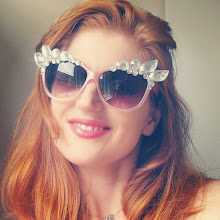
I'm an arts management worker/ artist/ designer. I work at Accessible Arts in administration and bookkeeping, but also work on various freelance activities from photography to graphic design. I'm Associate Partner at the ARI, the Big Fag Press, board member of Runway Australian Experimental Art and occasionally work at Bailey and Yang Consultants. My creative work has often been driven by social issues and commentary. This blog started as a way of documenting research for my honours year at uni, which I have continued, in order to gather inspiration for future artistic practice.
The Big Fag Press has decided to withdraw our participation in the Sydney Writer’s Festival MCA Zine fair this year. We will instead redirect our energy by taking part in an alternative event - the Other Worlds Zine Fair.
Our decision comes after much deliberation. We are opposed to the Abbott government's Operation Sovereign Borders scheme which violates refugee and human rights. The recent expanded involvement by MCA sponsor Transfield in offshore detention centres in Nauru and Manus Island is something we at Big Fag Press take a stand against.
The Big Fag Press does not wish to endorse an event which is supported by money raised from the mandatory detention of refugees.
We are hopeful that awareness raised, no matter how small, will have an effect on the conscience and opinions of everyday Australians, which will in turn eventuate in changes to federal discriminatory laws.
Please come along to this event and say hey to us. The facebook event is here. I am personally making a zine for sale and we're taking along a lot of our latest prints!
Yesterday courtesy of the Big Fag (thanks guys!), I attended a course on disability training at Accessible Arts run by Amanda Tink.
This was instigated by my project with John Demos, who's been doing a residency with our Press, funded by Arts NSW and administered by Accessible Arts.
There were quite a few things I learnt that I didn't know before. I generally treat everyone around me with respect, but when it comes a person with a disability, it's important to understand life from their perspective and make sure you know what phrases to use and how to approach them.
The section on stereotypes was one I was already very familiar with, but the section on communication was an important one for me. The difference, for example, between saying to a person who uses a wheelchair "do you need some help?" and "would you like some help?" is a good example because the idea of need perhaps takes away a little of their feelings of independence. That said, a person with a disability is not necessarily always in need of help - and they probably get asked that question about 10 times a day.
There's also many disabilities that are invisible. In fact, 1 in 5 Australians identify with having a disability, but the most prominent kinds of disabilities are psychological or health related. These people may find it difficult in work places as to whether or not to disclose their disability. Disclosure may mean they for example, would not prevail in a job interview. However should they not disclose, their disability may cause them difficulty at work.
Language was also a key factor of the training session. Personally, I would never use words like spastic or retard, but I wasn't aware that perhaps a word like "handicapped" might cause offence. The best way to refer to people with impairments is to first regard them as a person, and to not assume anything about their life. So for example, you should say a "person with cerebral palsy" not "he suffers from cerebral palsy". You should not say "the deaf man", you should say "person who is deaf/ hearing impaired". And generally, it's better to find out a person's name! Also never talk about them as if they are not present, obviously. There's also things like being honest if you haven't understood what a person has said, and knowing the difference between simple language and moderate speed as opposed to talking to someone as if they were a child.
One thing that came up was how some people who are deaf sometimes don't consider themselves to have an impairment at all. Rather, that their ability to use sign language simply places them in a separate linguistic culture, one which has been extensively developed. I didn't know that before.
50 years ago being left handed was considered something of a disability. 20 years ago being gay meant you had a psychiatric condition. It's the society and world that shifts. It was interesting to look at how society has treated the issue of disability over time, beginning with a religious perspective that a person with an impairment must be so because he had sinned, or his family had sinned. Then from a medical perspective we would do the best for a person we could medically, and then they would just have to do the best they could to try and integrate within their family and get by.
The current model stemmed from the UK in the 70's where we think of people who have an impairment as not them being disabled, but rather than society itself is disabling them because of all the barriers they face, taking a wheelchair up stairs, or trying to find a cinema session that has audio captions.
Not many organisations have Disability Action Plans - only about 40% of arts organisations in Australia. It's important to understand that it's not a matter of building a ramp and hanging some audio tour headphones on the walls, it's about creating an environment that is entirely welcoming and not hostile through a range of means, both physical and emotional, and then, making the community of people with disabilities aware of those changes.
Anyway, I learnt a lot at the training session and I'm sure it will help me in my many current endeavours!
Image from: The Age, 'Gay or Straight, Love is Love'
Those of you who know me, know I'm a 'wannabe' cake decorator, so this image caught my eye because the decorations are really awesome and something I'd love to try. However currently, this image - as cute as it is - is controversial.
I was once approached on the street by a charity worker who asked me what I thought is the most fundamental human right. I think he wanted me to say clean water, because polluted water is one of the most serious issues faced globally. Anyway, I wasn't really thinking, but my response was "love". I think maybe I threw him for a second, but yes, I truly believe that along with clean water, food and shelter, people have the right to love and be loved, and to be heard and understood.
So hear me out.
I'm an atheist, I don't believe in any higher governing power, but that doesn't mean I don't have a set of morals and values by which I live. I do, and one of them is the fact that in this sometimes scary world, humans have the ability to love one another, to do good to one another, and to fulfil each others' lives. I would say this belief is something close to what I might call my faith. It is what makes me a thankful person. It is what brings meaning to my life.
So the idea that people oppose the relationship and marriage of two people who love each other, and intend no harm to society, that is a threat to my beliefs.
Because in my philosophy of right and wrong, every person in this world deserves the chance to be happy.
Just changing the world 3 things at a time. Actually, while I've got you here, please do me a favour and go to this site: http://www.thehungersite.com Click a button on all the pages to donate to charity - it's free. For me? Please? (it takes like... 30 seconds)
Before I go crazy posting a million travel photos (and yes, I will), I wanted to talk about a specific experience I had in Sapa, in the mountains of North-West Vietnam, very close to the border of China.
We came at the wrong time of year - it was incredibly misty, the famous rice terraces were muddy, and the beautiful scenery we were hoping for was literally invisible. And yet Sapa was still one of my favourite locations of the ones I visited, mostly due to its cultural heritage. Many people find architecture and history very interesting in their travels. For me, it's the people- meeting them and seeing how they live - and how their lives are so different to mine. Often, different in a bad way - and yet, they are not unhappy.
About 88% of people who live in Vietnam are Vietnamese. The other 12% is made up of about 54 various ethnic minorities, most of which do not necessarily identify with the culture of Vietnam. Approximately 10% of the total Vietnamese population live in the mountain regions, the French used to refer to them as "Montagnards", which translates (kind of) to - "mountain people". Many live in poverty, with a lack of access to healthcare.
The mountains around Sapa are inhabited by several hill tribes - including the H'mong, and the Dao. Many of the women make embroidered bags, clothes, pillowcases, toys and other trinkets for sale to tourists using their surprisingly good English.
*Ladies from the H'mong tribe and baby Tuu in the North West mountains of Vietnam
Many websites discourage tourists from buying products from children or teenagers in order to keep them in schools within their villages. Every day leaving our hotel we would be followed by the women who talked to us, offered to take us on tours to their own villages and sell us things. Although the conversation and cultural experience was amazing, it became frustrating when we really did not want to purchase any more items, and it was hard to turn them down.
I am wondering if it was in their interests to purchase anything at all from these ladies - there were many similar items available in markets and shops, and although we wanted to help them, tourism is a major source of money for these places, and I wonder if the constant stream of hopeful sellers doesn't keep some tourists away. Some signs say not to give to beggars, and yet it is difficult to distinguish what is begging and what isn't. One lady insisted on us purchasing something, and even told us that if we bought something from her, she would leave us alone.
Here is something I posted on Facebook during my trip:
This holiday has confused my understanding of fair trade. On one hand, being a tourist and far richer than many people here, I feel uncomfortable bargaining too hard or walking away with anything I consider awesomely cheap. Yet, vendors even seem disappointed with a lack of will to bargain. Tourists thoughtlessly paying too much for products or services actually drives up the price for everyone, including locals. There doesn't seem to be much of a concept of a minimum wage, at least not for the tribe people or street vendors, besides how am I supposed to add up the hours it took a blacksmith to make a bracelet which their wives from the h'mong tribe then walk 25km to Sapa every day to sell to tourists? Then again, I don't buy from places like h&m who don't pay their workers enough, but am I doing the same thing by purchasing hand made handicrafts here for the same price as a banana? I wonder how Oxfam calculates fair trade.
*Lady from the H'mong tribe with embroidered bags
*Lady from the Red Dao Hill tribe of Vietnam
Since I've gotten back, I have been thinking that really, as a tourist, I can't really comprehend the lives of people living in these amazingly different places enough to judge whether a lady selling her life's work is begging or not. In places where I saw fair trade shops (and there were quite a few in Hoi An), I did support them, but in terms of deciding what's good for a population whose lives I cannot hope to understand, I think I'll leave that to the local tourism agencies, and entrepreneurial individuals who open stores in the hope of helping the community, such as Sapa Sisters, a tourist guide centre run by the H'mong.
If I ever go back to Sapa, I think doing a home-stay with the families of the villages would be an amazing experience, and one I think goes a longer way to helping them than buying a few bracelets (as beautiful as they are)!