About Me

My photo
Sydney, NSW, Australia
I'm an arts management worker/ artist/ designer. I work at Accessible Arts in administration and bookkeeping, but also work on various freelance activities from photography to graphic design. I'm Associate Partner at the ARI, the Big Fag Press, board member of Runway Australian Experimental Art and occasionally work at Bailey and Yang Consultants. My creative work has often been driven by social issues and commentary. This blog started as a way of documenting research for my honours year at uni, which I have continued, in order to gather inspiration for future artistic practice.

Sunday, February 3, 2013

H'mong bracelets and Fair trade


Before I go crazy posting a million travel photos (and yes, I will), I wanted to talk about a specific experience I had in Sapa, in the mountains of North-West Vietnam, very close to the border of China.

We came at the wrong time of year - it was incredibly misty, the famous rice terraces were muddy, and the beautiful scenery we were hoping for was literally invisible. And yet Sapa was still one of my favourite locations of the ones I visited, mostly due to its cultural heritage. Many people find architecture and history very interesting in their travels. For me, it's the people- meeting them and seeing how they live - and how their lives are so different to mine. Often, different in a bad way - and yet, they are not unhappy.

About 88% of people who live in Vietnam are Vietnamese. The other 12% is made up of about 54 various ethnic minorities, most of which do not necessarily identify with the culture of Vietnam. Approximately 10% of the total Vietnamese population live in the mountain regions, the French used to refer to them as "Montagnards", which translates (kind of) to - "mountain people". Many live in poverty, with a lack of access to healthcare.

The mountains around Sapa are inhabited by several hill tribes - including the H'mong, and the Dao. Many of the women make embroidered bags, clothes, pillowcases, toys and other trinkets for sale to tourists using their surprisingly good English.


Photograph: Louise Kate Anderson -Ladies from the H'mong tribe and baby Tuu in the North West mountains of Vietnam
*Ladies from the H'mong tribe and baby Tuu in the North West mountains of Vietnam 

Many websites discourage tourists from buying products from children or teenagers in order to keep them in schools within their villages. Every day leaving our hotel we would be followed by the women who talked to us, offered to take us on tours to their own villages and sell us things. Although the conversation and cultural experience was amazing, it became frustrating when we really did not want to purchase any more items, and it was hard to turn them down.

I am wondering if it was in their interests to purchase anything at all from these ladies - there were many similar items available in markets and shops, and although we wanted to help them, tourism is a major source of money for these places, and I wonder if the constant stream of hopeful sellers doesn't keep some tourists away. Some signs say not to give to beggars, and yet it is difficult to distinguish what is begging and what isn't. One lady insisted on us purchasing something, and even told us that if we bought something from her, she would leave us alone.


Here is something I posted on Facebook during my trip:

This holiday has confused my understanding of fair trade. On one hand, being a tourist and far richer than many people here, I feel uncomfortable bargaining too hard or walking away with anything I consider awesomely cheap. Yet, vendors even seem disappointed with a lack of will to bargain. Tourists thoughtlessly paying too much for products or services actually drives up the price for everyone, including locals. There doesn't seem to be much of a concept of a minimum wage, at least not for the tribe people or street vendors, besides how am I supposed to add up the hours it took a blacksmith to make a bracelet which their wives from the h'mong tribe then walk 25km to Sapa every day to sell to tourists? Then again, I don't buy from places like h&m who don't pay their workers enough, but am I doing the same thing by purchasing hand made handicrafts here for the same price as a banana? I wonder how Oxfam calculates fair trade.

Photograph: Louise Kate Anderson - Lady from the H'mong tribe with embroidered bags
 *Lady from the H'mong tribe with embroidered bags

Photograph: Louise Kate Anderson - Lady from the Red Dao Hill tribe of Vietnam
*Lady from the Red Dao Hill tribe of Vietnam

Since I've gotten back, I have been thinking that really, as a tourist, I can't really comprehend the lives of people living in these amazingly different places enough to judge whether a lady selling her life's work is begging or not. In places where I saw fair trade shops (and there were quite a few in Hoi An), I did support them, but in terms of deciding what's good for a population whose lives I cannot hope to understand, I think I'll leave that to the local tourism agencies, and entrepreneurial individuals who open stores in the hope of helping the community, such as Sapa Sisters, a tourist guide centre run by the H'mong.

If I ever go back to Sapa, I think doing a home-stay with the families of the villages would be an amazing experience, and one I think goes a longer way to helping them than buying a few bracelets (as beautiful as they are)!

*All photos are mine.

- Louise Kate Anderson

Online Thesis and Ivory Tower

By the way, I've just uploaded all my work from last year onto google drive, and added it to the links to the right of this blog.

You can read my honours thesis here - Deconstructing Fashion's Ideal Body.

*Cartoon by Neil Kerber

I'd also be incredibly happy for anyone to take a look at Ivory Tower Magazine, and not forgetting Ivory Tower Street Art Posters, Blue and Red (linked to the legible versions).

Silk - what you don't know probably won't upset you

On my various travels, in Europe and more recently, Vietnam, I've picked up a few beautiful silk scarves over the years. Yesterday by chance I happened to google how silk is made. Although I've been to a silk factory in Lyon, I never really understood the scientific process of how silkworms produce this luxurious fabric.

*Silk Worms, image sourced from Kidspot

I was... astonished, angry and saddened to learn that I can add silk to a long list of things like many household products, cosmetics, fur, cage eggs, etc that I no longer wish to buy. I was astonished because it's so commonplace to understand that something like fur comes from an "evil" place, but silk was always this beautiful, luxurious natural product that never harmed a fly. Pun intended - it actually harms the silk worms.  From several websites like this one, and this one, I learnt that most silk is produced from the cocoons of silk worms (which are apparently a lot like caterpillars). The caterpillars make their cocoon in order to transform into moths, and just before they eat their way out of the cocoons, they are boiled alive, before the cocoons are pried open and harvested as that beautiful, luxurious fabric we call silk.

So that's why I was astonished. I was angry because I'm sick of it. I don't want to live in a world I have to google every single product before I buy it to make sure it hasn't been involved in ripping someone off, treating something or someone or the earth badly, all for the glorious purpose of making someone else some money.

I'm no saint. I eat meat, I kill mosquitoes and cockroaches (or rather with the latter, I scream and run away until someone else does it). Nature has no shortage of cruelty. The frog eats the bug, the snake eats the frog, the bird eats the snake. Often in less than humane ways. I get it. But I don't torture cockroaches before I kill them. I realise caterpillars are caterpillars. People seem to classify smaller animals as "less than alive", as "unable to feel pain". Well, just because we don't like to think about it, doesn't mean they don't.

As (arguably), the most intelligent and powerful creatures on the planet, humans, who on a large scale, farm and kill animals for food, for fashion and even for sport, I believe we have a duty to the earth that has provided these species for us. Power doesn't come without responsibility, or at least it shouldn't. I realise that animal and environmental welfare is very much a first world problem - you do what you need to survive, and no starving society is going to be worried about the welfare of the monkeys they need to eat. What bothers me is the motivation behind everything - money.

Yes, the Great Barrier Reef is beautiful, but would anybody worry about it as much as we do if not for the billion dollar tourism industry it caters for? And even that isn't enough - I just donated to the WWF because turtles are washing up sick and dead on the shores for no reason anybody has yet worked out. Not only do we trick the fish onto our lines and suffocate them, we do it at a rate that will leave none of those fish for the future. It's not enough to use the fur off creatures' backs, we have to torture them to get it. We boil alive lobsters because it apparently makes them "fresher" to eat and we terrify them by chasing them around in "catch your own lobster" fork machines in pubs before we do. We turn a blind eye to the torture of animals like rabbits for industries like L'óreal that make billions of dollars a year and could very much afford to change their policies. But hey, if we make a profit from that mascara, what's the problem? It's not my rabbit being tortured.

And lastly, I was saddened. Sad that this beautiful scarf I was wearing that made me happy is no longer something I will enjoy wearing. No longer something I can say to someone "hey, check out my scarf - it's 100% silk and I got it in this cute store in Vietnam!"

*Cruelty free silk, image sourced from Fair Trade Products

No, to me a luxurious item is not luxurious when it's got blood all over it. The websites have told me to look for "cruelty free silk". Well I don't know about you, but I've never seen cruelty-free silk in my life. There's 20 brands of free-range eggs in supermarkets, but I imagine cruelty-free silk is harder to find than toothpaste that's not tested on animals.

I feel frustrated with this. Being human doesn't give us the power to own the world and all its species and do with them what we please just as long as it makes us some cash. Disrespecting a species you're farming to make money doesn't make your produce luxurious, it makes it dirty.

I'm on a tangent now, but I feel like humanity has misunderstood this concept of ownership. Working for money that humans created and paying for land they didn't doesn't really make it yours. Nature has been long before you were born, and will exist longer than you are alive. It is not owned by anyone. If anything, you are just borrowing it from future generations, and what is left of it for them is entirely up to you.

So here I am, trying to respect the silk worms that painfully died to make me this scarf. And frustrated with the world that allowed this to happen because everybody thought "hey, it's just a worm".

Photograph: Louise Kate Anderson - Silk scarves for sale in Sapa, Vietnam
*Silk scarves for sale in Sapa, Vietnam

Saturday, January 26, 2013

Some publications

So remember my Green Bans Art Walks photography published in City News?

*Green Bans cover photograph, mine.


Well since then, a few images also made it into the 250th edition of Art Monthly, along with an article by Ian Milliss, who is an amazing artist and writer I've had the pleasure of working with down at the Big Fag Press in projects after Green Bans finished.

*Scan of Art Monthly 2012, from milliss.com

I've also just been contacted about a few photos being used in a book titled Imagining Sydney, by Jill Bennett and Saskia Beudel from the National Institute of Experimental Arts, UNSW as part of the Curating Cities project - http://curatingcities.org/.

It's great to be getting my name in print as having been part of these projects, and adding to my CV.

I've also just signed up to Linked In.

Sunday, November 25, 2012

Francis Bacon AGNSW

Normally, I'm more a fan of the contemporary art side of things, but I don't pass up the chance to see complete collections of renowned artists' whom I've studied, when they're exhibited in Sydney for a short time.

Conceptually, I liked seeing the progression of Bacon's art to the events happening both in the world (such as the legalisation of homosexual sex), and in his life (such as the death of his lover). His paintings offered a window into his personality and struggles.

Many of his works were portraits of people he had strong relationships with, and some of his source material like photographs found in his studio really struck me.


*2 images: Photographer John Deakin

Often, exhibitions inspire me in strange ways, and I find myself rushing home to start a new project of some kind. In this case, I dug out my old SLR camera and am currently planning on reminding myself how to load/develop/print film photos so that I can justify taking both my DSLR and my SLR with me on my trip to Vietnam early next year. It's been a very long time since I've done any portrait SLR work, and I just realised how much I missed it.

Monday, November 12, 2012

FINITO!

Ivory Tower project is complete!

Here are a few images of the magazine, street art, and some sneak peaks into some photoshoots and other content.


*Artwork by Justin White

*Artwork by Giopet

*Artwork by Linda Wilken

*Artwork by Daniel Caballero 

*Photograph by Tristan Fitzherbert-Smith 

 *Photograph by Tristan Fitzherbert-Smith 

*Artwork by Max Temkin

*Photograph by Louise Kate Anderson

 *Photograph by Tristan Fitzherbert-Smith 

 *Artwork by Louise Kate Anderson
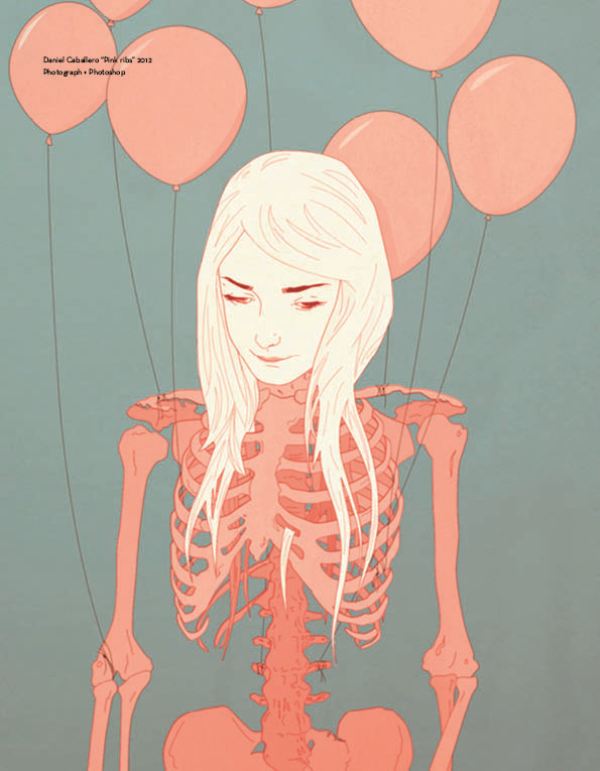

Tomorrow, I give the final presentation of my university degree!
Anyone interested in coming to see the UTS fashion exhibition Future of Fashion Showcase, please contact me.

Tuesday, October 23, 2012

HOMERUN

So I'm in the last week of my honours major project! Not getting much sleep, but every day gets me a step closer. I've set my print deadline for next Monday or if I have to, Tuesday. Then I have two weeks while proofs and prints are happening to put up the rest of my Street Art, work on my website, load things onto The Loop and update various social media platforms like my facebook page, twitter @LouiseKAnderson, and Instagram (LouiseKateAnderson).

I've joined in to work on promoting our year group through our social media pages as well. @utsfashion, #utsfashion, #futureoffashion, and UTS: Fashion, not to mention our continued fundraising from raffle tickets, & cupcakes every Monday in the DAB building, and our Pozible page.

Our catwalk is the evening of the 4th December in the UTS great hall. The exhibition there at #fashionspace runs for a week.


*Instagram photo mine. Cupcakes by Amanda Algeo