I'm an arts management worker/ artist/ designer. I work at Accessible Arts in administration and bookkeeping, but also work on various freelance activities from photography to graphic design. I'm Associate Partner at the ARI, the Big Fag Press, board member of Runway Australian Experimental Art and occasionally work at Bailey and Yang Consultants. My creative work has often been driven by social issues and commentary. This blog started as a way of documenting research for my honours year at uni, which I have continued, in order to gather inspiration for future artistic practice.
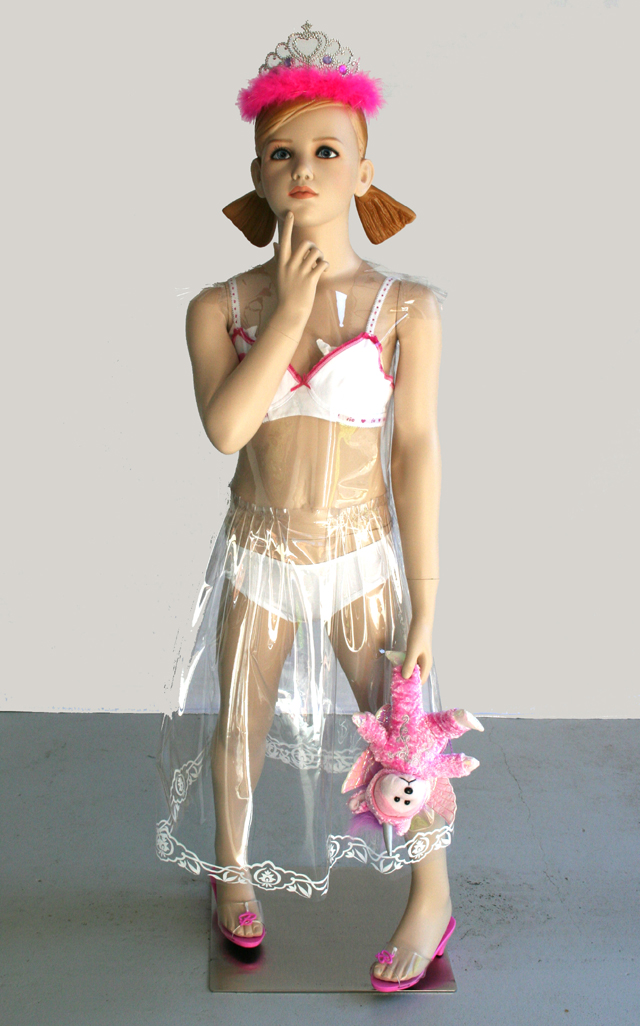
Sexualisation and objectification of young girls is a current social and political issue. This exhibition represents the way young girls in contemporary western cultures develop their identity based on popular culture and stereotyping which begins in childhood. Influenced through magazines, music videos, social media and the internet, these ‘young consumers’ are being seduced into stylising themselves on hyper-sexualised ideals.
-From the Casula Powerhouse website
Here are some photos I took of Daddy's Little Princess.
[All photos are mine of Linda Wilken's work at Casula Powerhouse Arts Centre]
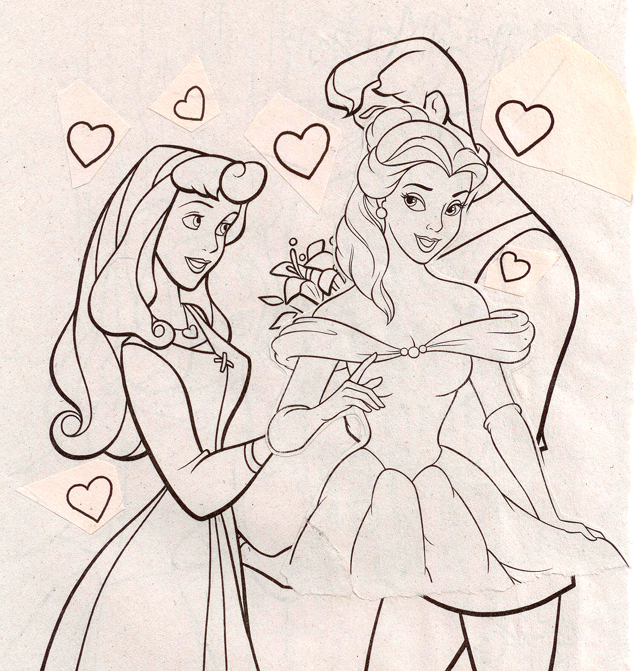
I went over to Firstdraft Depot last week (where the Big Fag Press is located), to give a speech to some artists in residence who might be interested in doing some prints. I also sat in on talks give by the artists about their work and was particularly interested in Linda Wilken who looks at the sexualisation of young girls, and subverting gender roles which society presents us with in many ways. She's currently using imagery from Disney in collage to encourage people to question what these stories we tell our children are really saying.
*2 images: Linda Wilken
One of the points she looks at is also magazines aimed at teenagers like Dolly and Girlfriend, who inevitably get picked up by much younger girls. These magazines are filled with information about sex, makeup, fashion, etc, all which, when put in the context of innocent childhood, can be a little unnerving. This was interesting to me because I've been looking at how adult women are affected by magazines, but I've never given much thought to the fact that even child models are being photoshopped.
I've been in further contact with Linda, and I'm currently reading her honours thesis. I've arranged to interview her and use some of her work in my major project. It was very lucky for me because one of my other artist contributors pulled out.
I read this article on the push for body image equality last week.
The way I read it, the author seemed to be saying that total body image equality as being pushed by the feminist society, is equal to narcissism. This concept outraged me - firstly self esteem is not necessarily just a feminist ideal - it's a human right. Self esteem is a huge part of a person's mental well being, and every single person has that right.
Obviously a person who is well outside the range of "health" is not going be conventionally beautiful. But beauty is, or at least, theoretically SHOULD BE a subjective term. Healthy is an objective term - it can be brought down to numbers and medical researched opinions, but beauty is not objective. The author seems to be saying that telling someone who is very overweight they're beautiful is wrong because they should be trying to change the fact that they're overweight. Okay, but generally people need to have self esteem in order to better themselves. Someone who is already overweight in all likelihood has self esteem issues already stopping them from helping themselves. Generally, someone who feels beautiful on the inside, as a whole, is going to be able to try harder to make themselves healthy (and thereby conventionally beautiful) on the outside.
Also, the above only relates to weight in terms of unhealthiness. A person with certain illnesses or disabilities with which they were born, which put them outside the ideal of conventional beauty, technically cannot seek to better themselves. Should we really be excluding them from the ability to feel beautiful? I really think not - in fact that probably borders on discrimination.
Lastly, we're assuming that beauty is merely a physical attribute, when it is certainly not.
I think my point is that there are things people think, things that pass through everyone's head, that should never be said outloud. Okay, so we're constantly fed images of what it beauutiful and what is not, and you pass someone in the street who plainly does not fit those characteristics. It's fine to think that, it's not fine to say it. And I think this author is pushing that boundary.
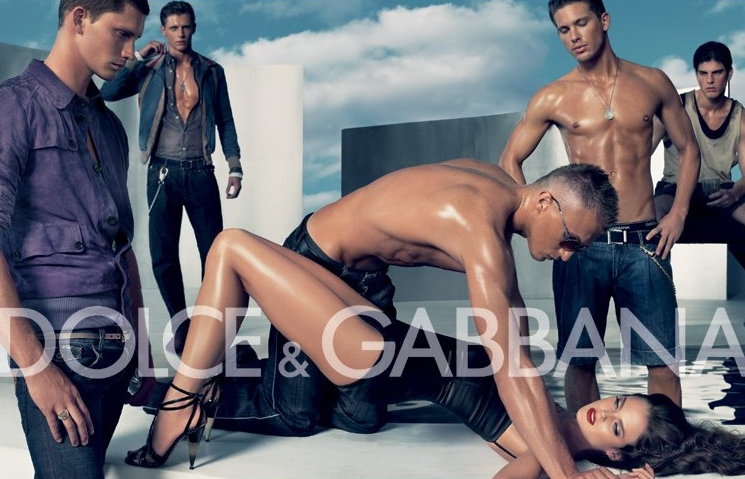
This advertisement for D & G's spring/ summer 2007 collection was pulled from circulation after both the Spanish and Italian governments demanded a withdrawal because the ad represented this woman in a situation that had elements of violence against women, and a submissive woman in the hands of male domination.
I completely agree with these statements. What message are we sending to the public here? D &G labelled the objections "a bit backward". Should we be moving forward to male domination and violence?
I saw a report a few weeks ago on SBS news about young Muslim women making blogs surrounding their niche fashion world inspired by Islamic Fashion Week.
Now, just from the comments, it doesn't take a genius to see there's definitely been a lot of controversy in the last 10 years or so on the topic of the headscarf and burqa - Do they repress women? Should we make them conform in our country? Is it a security issue? What is the value in one's freedom to wear what they want? Should we not push for secularism in schools in the name of equality?
Personally, I probably come down on the side of the individual's right to choose how they dress. But then again, I'm not an expert on the topic, and actually I have a few friends who are strongly against letting what they feel to be an oppression of women continue. But I've never actually got to ask a Muslim woman what they think of the matter. So I would say that my opinion isn't exactly valid once it's totally formed.
I don't like the idea of uneducated women in third world countries doing exactly what they're told because showing their hair and neck may be an excuse for being raped. But I think the idea that educated Muslim women are still choosing the modesty and cultural traditions of their people and putting a spin on it by seeking out the latest fashion trends to almost bring out the subculture and make it a valid way of dressing in the view of the fashion world, sends a strong message that these women are not feeling repressed, or forced to do these things. I had an acquaintance in France who once told me she wore the headscarf simply because she said she'd feel naked without it. And my thoughts were, well, I'm glad you didn't grow up in France because that may have meant a choice between you going to school feeling naked or having to pay a lot of money for a special school.
I also had a Moroccan friend who said that his sisters and many of the young women in Morocco now just choose not to wear the headscarf at all - they don't feel the pressure to. Perhaps some of the superficial parts of the Islamic religion have relaxed in Morocco as opposed to some other parts of the continent. In the same way that some of the "rules" of Catholicism and Christianity have relaxed just to fit into the modern world.
And similarly on the other hand, I imagine the older generations of Islamic women would feel confronted by the nature of this "commercialisation" of their religious dress.
A polemic issue, to say the least. And I can only come at it from the point of view of an atheist. But I thought it was interesting, what it says about clothes in general and how you get used to wearing something so much that you feel naked without it, regardless of the reasons you began to wear it and if you even continue to agree with those reasons. I know if I'm missing one of the rings I usually wear or I go out without a handbag or even with bare legs at the beginning of summer, I get a similar sort of sensation. Nothing of course, that can make me understand this huge issue, but maybe the next time I see a young lady in a headscarf, I'll ask.
.JPG)
.JPG)
.JPG)
.JPG)
.JPG)
.JPG)
.JPG)
.JPG)
.JPG)
.JPG)
.JPG)