About Me

My photo
Sydney, NSW, Australia
I'm an arts management worker/ artist/ designer. I work at Accessible Arts in administration and bookkeeping, but also work on various freelance activities from photography to graphic design. I'm Associate Partner at the ARI, the Big Fag Press, board member of Runway Australian Experimental Art and occasionally work at Bailey and Yang Consultants. My creative work has often been driven by social issues and commentary. This blog started as a way of documenting research for my honours year at uni, which I have continued, in order to gather inspiration for future artistic practice.
Showing posts with label Homosexuality. Show all posts

Saturday, September 7, 2013

Accessible Arts Disability Training Day


Yesterday courtesy of the Big Fag (thanks guys!), I attended a course on disability training at Accessible Arts run by Amanda Tink.

This was instigated by my project with John Demos, who's been doing a residency with our Press, funded by Arts NSW and administered by Accessible Arts.

There were quite a few things I learnt that I didn't know before. I generally treat everyone around me with respect, but when it comes a person with a disability, it's important to understand life from their perspective and make sure you know what phrases to use and how to approach them.

The section on stereotypes was one I was already very familiar with, but the section on communication was an important one for me. The difference, for example, between saying to a person who uses a wheelchair "do you need some help?" and "would you like some help?" is a good example because the idea of need perhaps takes away a little of their feelings of independence. That said, a person with a disability is not necessarily always in need of help - and they probably get asked that question about 10 times a day.

There's also many disabilities that are invisible. In fact, 1 in 5 Australians identify with having a disability, but the most prominent kinds of disabilities are psychological or health related. These people may find it difficult in work places as to whether or not to disclose their disability. Disclosure may mean they for example, would not prevail in a job interview. However should they not disclose, their disability may cause them difficulty at work.

Amanda played us this amazing video from the UK Disability Rights Commission: (you can find the second part on YouTube)


Language was also a key factor of the training session. Personally, I would never use words like spastic or retard, but I wasn't aware that perhaps a word like "handicapped" might cause offence. The best way to refer to people with impairments is to first regard them as a person, and to not assume anything about their life. So for example, you should say a "person with cerebral palsy" not "he suffers from cerebral palsy". You should not say "the deaf man", you should say "person who is deaf/ hearing impaired". And generally, it's better to find out a person's name! Also never talk about them as if they are not present, obviously. There's also things like being honest if you haven't understood what a person has said, and knowing the difference between simple language and moderate speed as opposed to talking to someone as if they were a child.

One thing that came up was how some people who are deaf sometimes don't consider themselves to have an impairment at all. Rather, that their ability to use sign language simply places them in a separate linguistic culture, one which has been extensively developed. I didn't know that before.

50 years ago being left handed was considered something of a disability. 20 years ago being gay meant you had a psychiatric condition. It's the society and world that shifts. It was interesting to look at how society has treated the issue of disability over time, beginning with a religious perspective that a person with an impairment must be so because he had sinned, or his family had sinned. Then from a medical perspective we would do the best for a person we could medically, and then they would just have to do the best they could to try and integrate within their family and get by.

The current model stemmed from the UK in the 70's where we think of people who have an impairment as not them being disabled, but rather than society itself is disabling them because of all the barriers they face, taking a wheelchair up stairs, or trying to find a cinema session that has audio captions.

Not many organisations have Disability Action Plans - only about 40% of arts organisations in Australia. It's important to understand that it's not a matter of building a ramp and hanging some audio tour headphones on the walls, it's about creating an environment that is entirely welcoming and not hostile through a range of means, both physical and emotional, and then, making the community of people with disabilities aware of those changes.

Anyway, I learnt a lot at the training session and I'm sure it will help me in my many current endeavours!

Tuesday, July 16, 2013

Cake Decorations in Love

http://images.theage.com.au/2013/07/15/4572207/art-SHE-lesbian-20130715162720469250-620x349.jpg
Image from: The Age, 'Gay or Straight, Love is Love'


Those of you who know me, know I'm a 'wannabe' cake decorator, so this image caught my eye because the decorations are really awesome and something I'd love to try. However currently, this image - as cute as it is - is controversial.

I was once approached on the street by a charity worker who asked me what I thought is the most fundamental human right. I think he wanted me to say clean water, because polluted water is one of the most serious issues faced globally. Anyway, I wasn't really thinking, but my response was "love". I think maybe I threw him for a second, but yes, I truly believe that along with clean water, food and shelter, people have the right to love and be loved, and to be heard and understood.

So hear me out.

I'm an atheist, I don't believe in any higher governing power, but that doesn't mean I don't have a set of morals and values by which I live. I do, and one of them is the fact that in this sometimes scary world, humans have the ability to love one another, to do good to one another, and to fulfil each others' lives. I would say this belief is something close to what I might call my faith. It is what makes me a thankful person. It is what brings meaning to my life.

So the idea that people oppose the relationship and marriage of two people who love each other, and intend no harm to society, that is a threat to my beliefs.

Because in my philosophy of right and wrong, every person in this world deserves the chance to be happy.

For me, that's all there is to it.

Sunday, November 25, 2012

Francis Bacon AGNSW

Normally, I'm more a fan of the contemporary art side of things, but I don't pass up the chance to see complete collections of renowned artists' whom I've studied, when they're exhibited in Sydney for a short time.

Conceptually, I liked seeing the progression of Bacon's art to the events happening both in the world (such as the legalisation of homosexual sex), and in his life (such as the death of his lover). His paintings offered a window into his personality and struggles.

Many of his works were portraits of people he had strong relationships with, and some of his source material like photographs found in his studio really struck me.


*2 images: Photographer John Deakin

Often, exhibitions inspire me in strange ways, and I find myself rushing home to start a new project of some kind. In this case, I dug out my old SLR camera and am currently planning on reminding myself how to load/develop/print film photos so that I can justify taking both my DSLR and my SLR with me on my trip to Vietnam early next year. It's been a very long time since I've done any portrait SLR work, and I just realised how much I missed it.

Friday, June 29, 2012

Linda Wilken

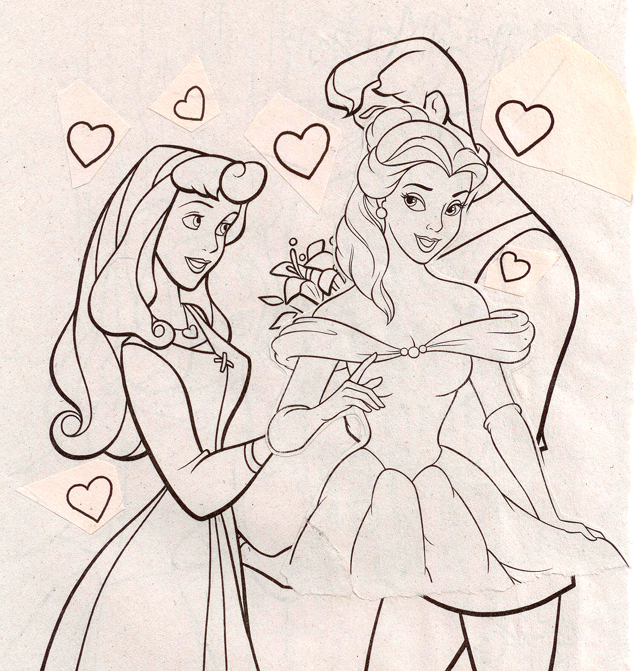
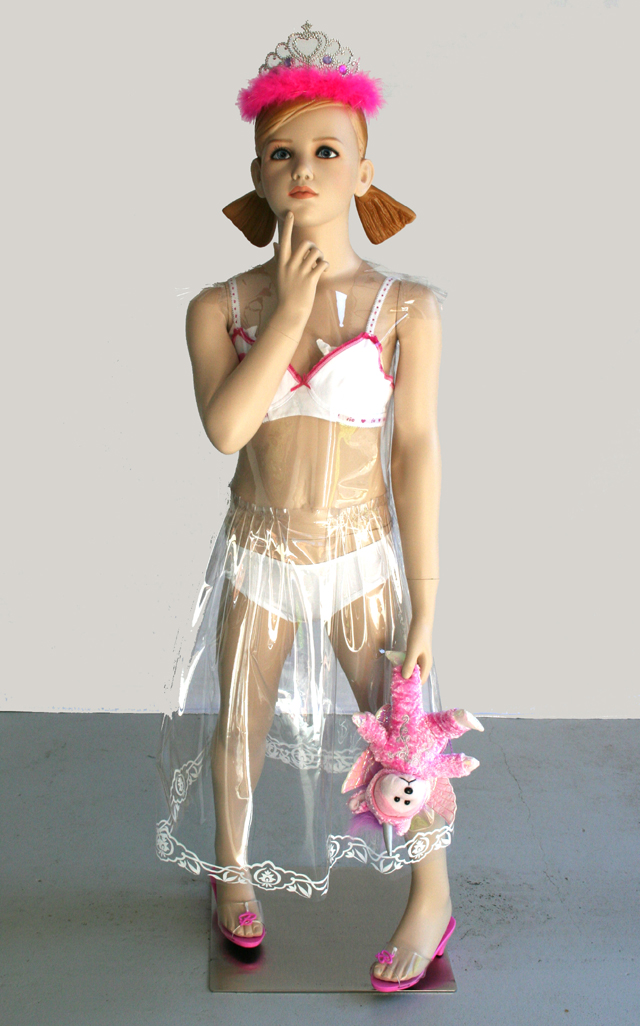
I went over to Firstdraft Depot last week (where the Big Fag Press is located), to give a speech to some artists in residence who might be interested in doing some prints. I also sat in on talks give by the artists about their work and was particularly interested in Linda Wilken who looks at the sexualisation of young girls, and subverting gender roles which society presents us with in many ways. She's currently using imagery from Disney in collage to encourage people to question what these stories we tell our children are really saying.


*2 images: Linda Wilken


One of the points she looks at is also magazines aimed at teenagers like Dolly and Girlfriend, who inevitably get picked up by much younger girls. These magazines are filled with information about sex, makeup, fashion, etc, all which, when put in the context of innocent childhood, can be a little unnerving. This was interesting to me because I've been looking at how adult women are affected by magazines, but I've never given much thought to the fact that even child models are being photoshopped.

I've been in further contact with Linda, and I'm currently reading her honours thesis. I've arranged to interview her and use some of her work in my major project. It was very lucky for me because one of my other artist contributors pulled out.

Tuesday, April 3, 2012

A Small Victory

*Image referenced from facebook: Gay Rights in Australia


For the Senate Enquiry ending today, 45,000 Australians pledged their support for marriage equality, one of whom was me. This is a significant milestone and unprecedented support for a Bill which will legalise same-sex marriage, which I am crossing my fingers will go through.

Wednesday, March 14, 2012

Katter vs Katter


This is the image that has sparked so much controversy in the lead up to Queensland's election next week. It was used in a television advertisement by Bob Katter of the Katter Australian Party against Campbell Newman. The photograph in question was taken by a photographer who had no idea his image would be used to discriminate against the friends of his he was photographing,


I believe this quote sums it up correctly:
"this is not about political correctness. Katter did not get permission to use this image of these people. Why? Everyone knows you cant publish without a consent release - and this goes to the core of the issue - Katter doesnt see gay men as real people, as worthy of getting their consent...it shows how lowly people like Katter think of gay people and its this level of disconnect which also explains why people like Katter just dont understand gay marriage. Katter is the issue here not gay marriage or being politically correct."

Bob Katter's half brother has responded to the issue with this advertisement, which I think is extremely calm, reasonable and educated:

I think of this issue in light of other recent events. Namely the terror against minority groups in Iraq and  the graffiti attack on the office of Labor MP Curtis Pitt.


To be honest, my initial response was to think that people for gay marriage are organising rallies, and support days, and people against gay marriage are making illegal attacks, and taking advantage of situations that have no merit to their politics to get ahead in polls. I know which side I'm taking.

*Videos and images embedded from respective websites.

Tuesday, January 31, 2012

Rally for Marriage Equality

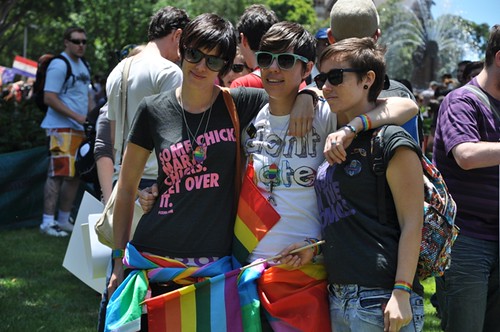
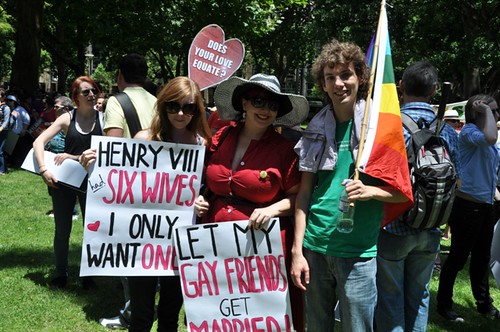
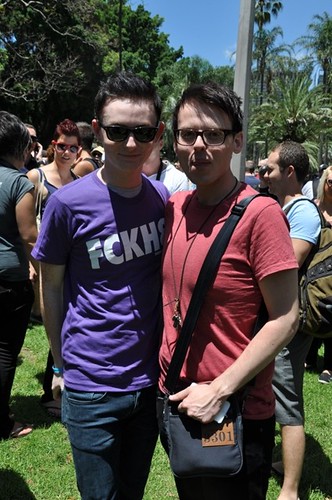
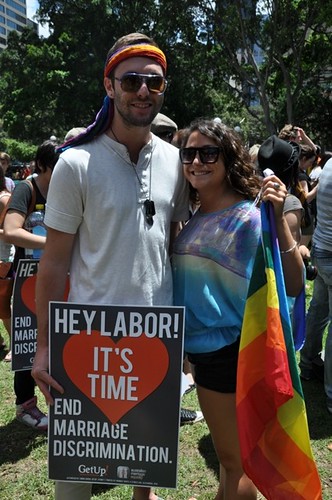
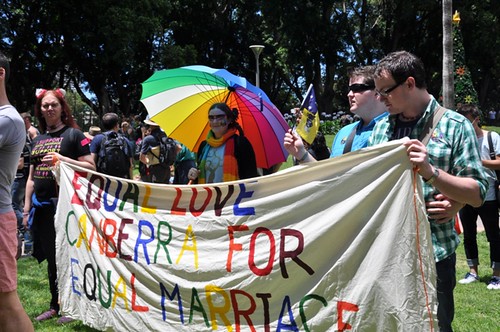
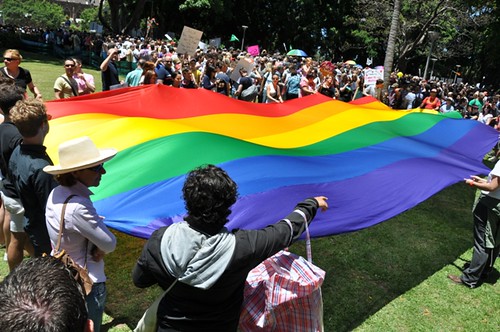
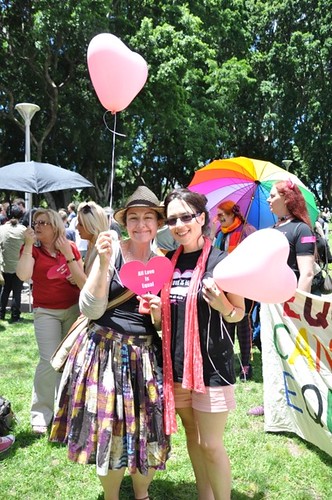
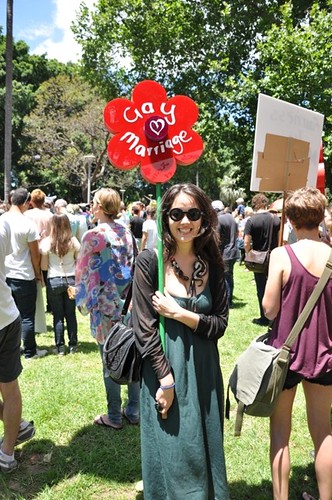
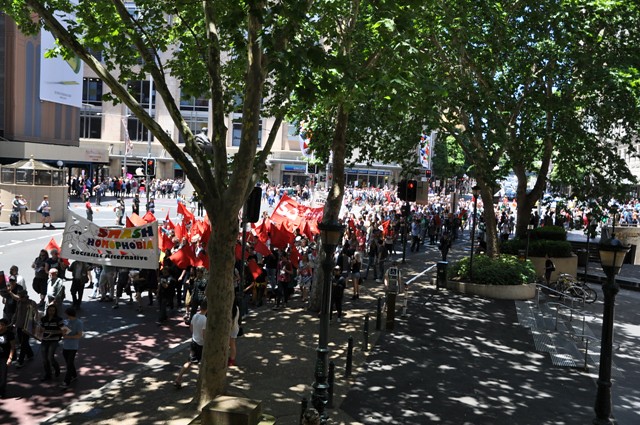
Last year on December the 3rd I went to Sydney's Rally for Marriage Equality as an opportunity to do some research, take some photos and generally support a cause I believe in. My opinion is pretty much that there should be more love in the world, so who cares what form it takes. I understand that "marriage" is technically a religious term, so honestly, if the Church doesn't want to get involved in gay marriage, that's their choice. But I believe in the separation of Church and State, and the idea that two people in love don't have equal rights just because of their sexuality pretty much just seems like discrimination. Why stand in the way of people's happiness? And considering the rate of suicide among the gay community, I really think governmental support could go a long way in sending a strong message.

Here's some of my photos from the day:
I loved how everyone took the opportunity to dress for thr cause, come out and be part of this very colourful community. Confidence in numbers I suppose!


The rest of this Flickr set can be found here. Some of my photos were also used in this beautiful Coming Out Journal on Tumblr.